Should the Hyperscalers control their own memory manufacturer?
Is memory post-cyclical, in a big cycle, or is demand just a bubble?

Answering the last question first, I do not believe memory demand is in a bubble. Notice I emphasize the word demand. Unless we see a radical new AI paradigm that fundamentally changes how AI consumes memory, the basis of LLM and agent architecture will require an ever-increasing level of faster and larger memory. The models get bigger, context and data expand, yadada, you know this.
In fact, memory demand since the invention of DRAM has been structurally increasing. The problem is that it has always been a vicious cycle of booms and busts. We can attribute this past volatility to having a large number of players producing an interchangeable commodity, many of which were subsidized companies in Asia. Post-consolidation in the 2010s, we saw the Big 3 remain. Yet we still have booms and busts, though they are no longer severe enough to wipe out any of those three.
The main reason for the continued booms and busts is that demand has historically been hard to forecast and coordinate. The DRAM and memory markets served consumers whose wants and desires fluctuate. Smartphone sales do not grow at a steady pace, consumers go on PC binges and busts, and enterprises have varying refresh cycles. Memory companies served a market where nobody really knew what demand would be and whose end customers numbered in the billions. Yes, they sell to hardware assemblers, but consumers ultimately make the choices on how many gigabytes they want, and assemblers ramp down when consumer demand ebbs and flows.
Now, however, the DRAM market is largely consumed by trillion-dollar companies, which are now the majority consumers of memory. Google, Amazon, Microsoft, Meta, Anthropic, OpenAI, and SpaceX are selling into an accelerating AI inflection point. Their demand is smooth, and they map out compute needs in years rather than consumer whims. The market demand for AI has barely been tapped, and yet we see the supply and demand balance so badly out of whack that Hynix, Micron, and Samsung will make hundreds of billions in profit off the hyperscalers.
This brings us to the key question: how deep is the moat for these memory players?
We can partly evaluate this by looking at R&D spend, with Micron spending $3.8B and Hynix spending $4.4B. Meanwhile, TSMC spent nearly double that amount, and Intel's spending on Foundry is similar or perhaps a tad higher than TSMC's.
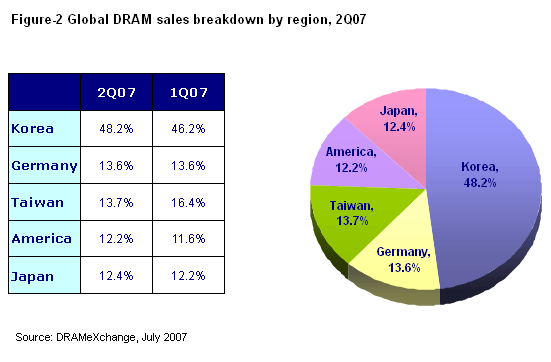
Looking into the past, we see that historically, far more memory players were successful compared to logic players. There were roughly 10 memory makers prior to the Great Financial Crisis.
For logic, we can see that on the leading edge at the time, TSMC and UMC dominated. IBM was also on the leading edge, but barely generated revenue. (Intel was an IDM) While Samsung picked up a bit of the slack in the 2010s, as UMC and Chartered dropped out.
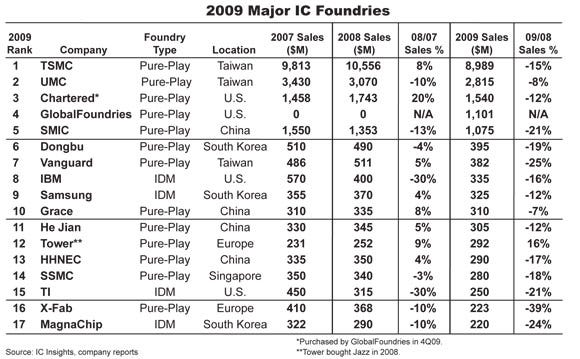
So from the data, we can conclude that logic is significantly harder than memory. In fact, right up until 2020, Intel was a leading NAND manufacturer before it sold the business to Hynix.
Dilemma facing the hyperscalers
My belief is that even if memory remains cyclical, it actually makes sense for hyperscalers to own or control their own memory player. Why?
Well, let’s assume that the coming supply in 2028, 2029, and 2030 is too much for the market to bear. We get a large cyclical downdraft in memory prices. What do you think will happen? The memory players will tighten capacity again, and they will want to ride a tight cycle. If you are an AGI believer and you know that memory demand will continue on an upward slope, you will be screaming at them as they come to screw you over again. We will get the same cycle as of now, where over the next three years, the memory makers will make trillions, yes, trillions off the hyperscalers. Do the hyperscalers want this to happen again in the 2030s?
As a CEO, do you want to plan your long-term future around increasing AI demand, knowing there are cycles where your CAPEX will double just to get the same output? Put it this way: hyperscalers need $100B to $150B in equipment to build a very, very large memory maker, yet they are instead paying out trillions. They face either the possibility of non-cyclical, structural 60% to 70% margin memory makers, or another boom-bust cycle in the 2030s that strips them of trillions.
So what is the path forward?
Well, there are two real choices.
The threat of hyperscalers introducing a new player is enough for the memory companies to cave and offer dedicated memory fabs at more reasonable fixed margins, perhaps 50% ish? This is what the end customers want, and memory players can deliver this instead of seeking to juice prices. Hyperscalers take no risk and deploy no capital, and this might be enough.
Hyperscalers want to control their own destiny, or memory players refuse to cave on dedicated fabs with partial control for the end customer. A new player emerges.
Now, what does this look like?
Well, I wrote before about why Intel might consider entering the DRAM market.
Why Intel?
Well, none of the hyperscalers outside of SpaceX (who wants to manufacture DRAM now) have any semiconductor manufacturing experience, supplier relations, employees, IP, or tribal knowledge in the field. This makes it quite difficult to see all the hyperscalers spin out an ‘AI Memory Co’ with equal funding and try to make DRAM, NAND, HBM, and the rest completely from scratch.
That approach would be quite risky in terms of capital return, and at present, a big issue for the hyperscalers is time to market. Instead, Intel, which already has a network of fabs as well as the tribal knowledge, expertise, and employees, is much more capable of standing up a business. Not only that, but being US-based is favorable to the US government and makes it easier to control and follow US laws compared to trying to get TSMC or Nanya to do this.
Intel could start developing a DRAM process across its network of fabs and its R&D hub in Oregon while construction of additional R&D and HVM fabs gets underway. This would allow a quicker time to market and relieve the hyperscalers.
The exact corporate structure is hard to know.
Do hyperscalers own the ‘Memory Co’, while Intel gets a license and royalties for the process and manufacturing? (The hyperscalers would sell at cost to themselves plus an Intel fee).
Or would Intel get a percentage ownership for its efforts outside of the initial cash contributions instead, with the company selling at market prices and redistributing quarterly profits to owners?
Or would it be something wholly owned by Intel, where hyperscalers front-run the capital in exchange for fixed gross margins across each fab, perhaps in the 40s?
I do not know; this has to be worked out.
But I do know something for certain: the current situation, especially if it is no longer cyclical, is not tenable when your end customers have the funds and are being gouged.
These efforts in the short to medium term will have no impact on the memory companies, just like ASICs have not impacted Nvidia’s monster revenue growth. This is a 2030s fix, and hyperscalers will likely keep buying third-party memory even after this initiative is up and running. But the headline will surely be a shock…
The Hyperscalers and Intel should put their efforts in speeding up the commercialization of ZAM.
Reshoring...
The idea is interesting, but it doesn't explain how to solve wafer shortage and tooling shortage. Do full stack in-house?